Does your Wrangler bumper support a winch?
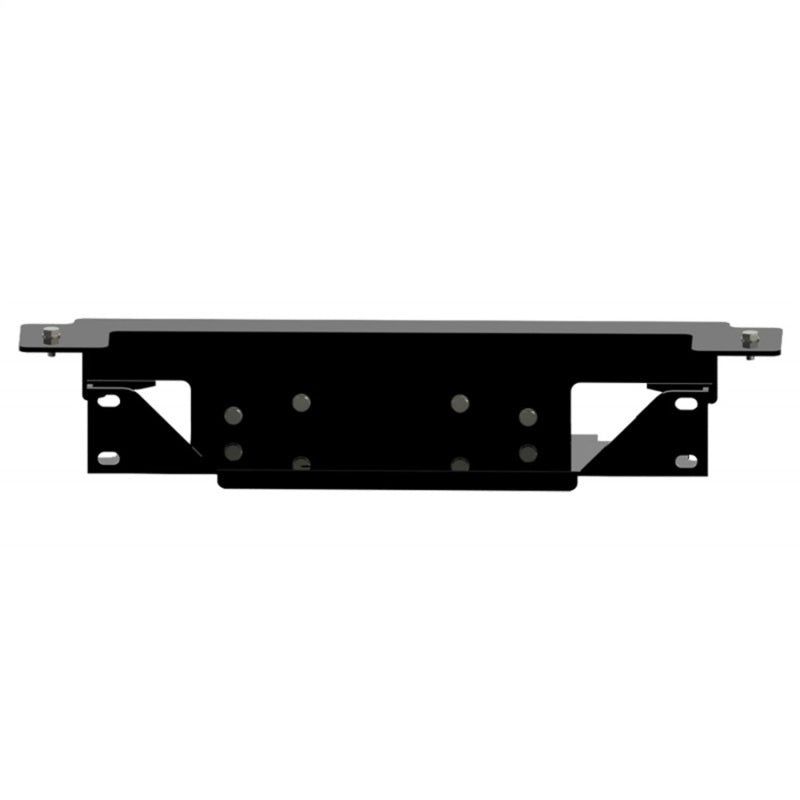
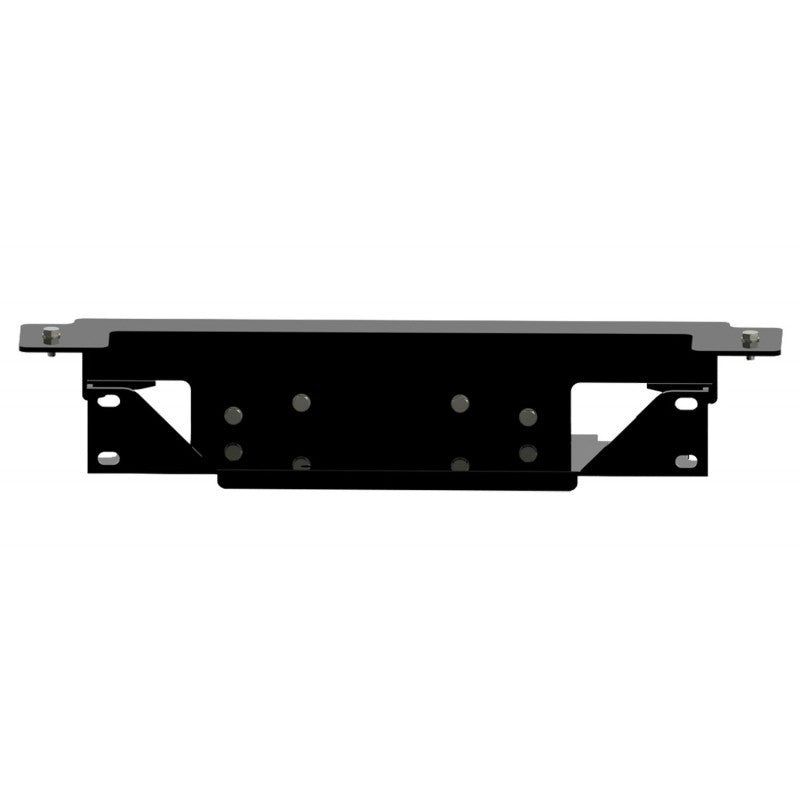
This is the question that catches most first-time buyers. Standard factory bumpers generally are not rated to transfer winch loads into the frame; do not assume a factory bumper is winch-rated without verifying its manufacturer specifications for your exact vehicle and bumper configuration. A cosmetic or lightly reinforced bumper should not be used as a winch mount, regardless of what bolts to it. Before you select a winch, confirm one of three things: your aftermarket bumper already has an integrated winch mount and is rated for the load, you have a generation-specific bolt-on winch plate that attaches to a compatible steel bumper, or you are buying a complete winch-ready steel bumper alongside the winch. The bumper and mounting plate carry the recovery load into the Wrangler frame. If that path is not confirmed, sort the bumper first.
Many winches use the common 10 × 4.5-inch four-hole mounting pattern, but verify the winch, plate, bumper, and hardware together before ordering. Do not assume the pattern is universal.
Choosing the right winch capacity for your Wrangler
Size from your actual loaded weight, not the sticker weight. Include steel bumpers, armor, larger tires, tools, fuel, and camping gear. A minimum baseline is approximately 1.5 times that loaded weight, but this is a starting point only, difficult terrain, steep inclines, deep mud, and recovery angle can all require additional capacity or rigging beyond what that figure suggests.
| Wrangler setup | Practical starting point |
|---|
| Lightly modified two-door Wrangler (verify actual loaded weight) | 8,000 lb class as a general example |
| Trail-equipped JK or JL two-door | 8,000 to 10,000 lb |
| Four-door with steel bumpers, armor, and larger tires (verify actual loaded weight) | 9,500 to 12,000 lb |
| Heavily loaded or armored expedition build | 12,000 lb class |
These ranges are general examples only. The right capacity depends on your actual loaded vehicle weight and expected recovery conditions, not body style alone. One honest note: rated line pull is highest on the first layer of rope or cable on the drum. As more line builds up, pull rating drops. A 12,000 lb winch is not automatically the right call for every JL or JLU. On a lightweight two-door or JL 4xe, the added front-end weight and electrical demand may matter more than the extra capacity headroom.
Synthetic rope or steel cable?
Synthetic rope is often preferred when low weight and easier handling are priorities, particularly on mud, snow, and wet trails. It is lighter than steel cable and easier to handle without gloves. Synthetic rope generally reduces stored elastic energy compared to steel cable, which can lower recoil hazard if the line fails, but it does not eliminate that risk, and correct recovery procedures and a damper remain necessary regardless of line type. The trade-off is real: synthetic rope needs protection from abrasion, heat, UV exposure, and sharp bumper edges. It also requires more attention to storage and condition checks.
Steel cable resists abrasion better and is more familiar to handle in rocky terrain, but it is heavier on the front axle, can develop sharp broken strands over time, and requires gloves and regular corrosion inspection.
Use the fairlead specified for the line and winch. Synthetic rope is commonly paired with a smooth hawse fairlead; steel cable is commonly paired with a roller fairlead. Compatibility depends on the winch-line and fairlead manufacturer's specifications, material, radius, and condition. Fitting the wrong fairlead accelerates wear and can damage the line during a recovery.
Fitment by Wrangler generation
Generation and bumper type determine fitment, not engine choice. The winch mounts to the bumper and frame structure.
| Generation | Model years | Fitment direction |
|---|
| YJ | 1987 to 1995 | Requires a YJ-specific bumper or mounting plate. Not interchangeable with TJ hardware. |
| TJ | 1997 to 2006 | Requires TJ-specific mounting hardware and bumper clearance. |
| JK / JKU | 2007 to 2018 | JK-specific fitment. Verify two-door or four-door configuration and bumper pattern. |
| JL / JLU | 2018-present, subject to market and model-year confirmation | Direct-fit installation requires a JL-compatible bumper or plate; confirm the complete winch-and-mount combination for your specific configuration. |
On JL 4xe models, verify the bumper and winch manufacturer's fitment notes for battery, grille, camera, and control-box clearance. A low-profile winch or remotely mounted control box may be necessary.
Trim level alone does not confirm compatibility. Rubicon, Sport, Sahara, and Willys each have different factory bumper configurations. Verify model year, generation, body style, bumper type, and mounting pattern before ordering.
Installation and electrical requirements
Many vehicle-specific systems are designed for bolt-on installation, but follow the manufacturer's instructions and confirm whether trimming, drilling, or relocation of factory components is required. On JL and JL 4xe builds, check only the components equipped on your vehicle, grille, front camera, sensors, and radiator clearance, against the specific manufacturer's clearance requirements before mounting.
Connect the winch according to the manufacturer's wiring diagram, normally using heavy-gauge positive and negative connections to the battery or approved grounding point. Cable routing must avoid exhaust heat, steering components, and moving suspension parts. Battery condition and wiring directly affect winch operation under load; alternator capacity mainly affects charging recovery during repeated use. For repeated or heavy recovery use, a vehicle-specific electrical assessment and a manufacturer-compatible battery, isolator, or charging-system solution may be worth planning ahead, particularly on the JL 4xe, where the hybrid electrical architecture requires vehicle-specific guidance from Jeep and the winch or bumper manufacturer before any electrical upgrade is considered. See our battery and charging upgrades if you are planning a more demanding build.
A winch adds weight to the front axle. If you are combining a winch with a suspension lift or leveling kit, check the front-end load rating and confirm manufacturer compatibility for your specific build. See Wrangler suspension for lift and leveling options.
FAQ
Will my factory Jeep Wrangler bumper support a winch?
Standard factory bumpers generally are not rated for winch loads. Do not assume a factory bumper is winch-rated without verifying its manufacturer specifications. You typically need a steel winch-ready bumper or a generation-specific mounting plate that transfers recovery loads into the frame.
What winch capacity do I need for a loaded JL or JLU?
Calculate your actual loaded weight including armor, bumpers, larger tires, fuel, and gear. Use approximately 1.5 times that figure as a minimum baseline, then check the product rating and your expected recovery conditions. A heavily loaded four-door JL will generally fall in the higher capacity ranges, but select based on your actual loaded-weight calculation and terrain, not body style alone.
Is synthetic rope better than steel cable for European conditions?
Synthetic rope is often preferred when low weight and easier handling are priorities, including in mud, snow, and wet conditions. It generally reduces stored-energy and recoil hazard compared to steel cable if the line fails, but correct recovery procedures and a damper remain necessary. Steel cable is more abrasion-resistant but heavier and harder to inspect for damage.
Does a JK winch fit a JL?
JK-specific and JL-specific mounts are generally not interchangeable. Do not assume cross-fitment unless the manufacturer explicitly lists both applications.
Does installation require welding?
Not with a correctly matched vehicle-specific bumper or plate, though follow the manufacturer's instructions and confirm whether trimming or modification is required. Welding is only required for custom fabrication or non-standard mounting structures.
Do I need a stronger battery or alternator?
A healthy battery may be adequate for short, occasional recoveries, but capacity and condition must be verified against the winch manufacturer's requirements. For repeated heavy recoveries or a heavily loaded build, a vehicle-specific electrical assessment and manufacturer-compatible battery or charging-system solution is worth planning ahead. On JL 4xe models, seek vehicle-specific guidance before making any electrical system changes.
Is delivery available across Europe without import fees?
For eligible products shipped from EU stock to EU destinations, no import charges are normally due. Verify destination-specific taxes and product availability at checkout.

 Build of the month