How much lift do you actually need?
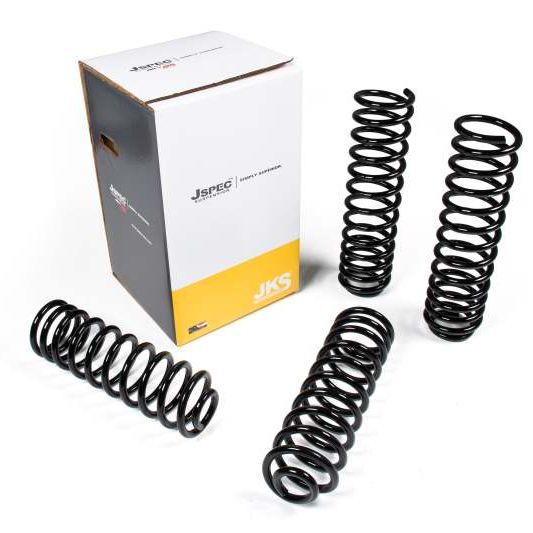
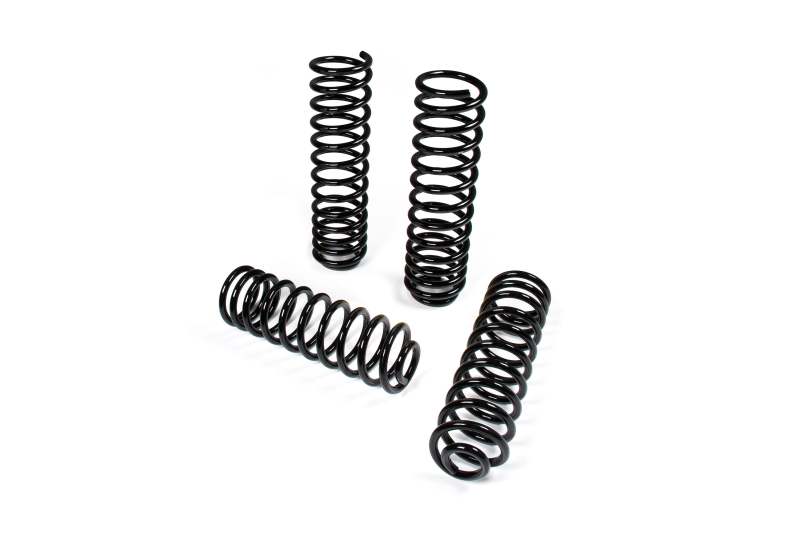
For most European Wrangler owners, a 2 to 2.5 inch coil lift is the right starting point. On many JK and JL setups, this will typically accommodate 33. 35 inch tires with appropriate wheel offset and possible minor trimming at full articulation; always verify clearance for your specific trim and fender configuration. It keeps the Jeep manageable on motorways and cobblestones. The JKS Manufacturing JK 4dr 2.5in Coil Box Kit is the reference here: tuned coils matched to that lift height, not a spacer stacked on top of tired factory springs. If you want 35 inch tires and wheel hard on weekends, a 2.5 inch lift with the right offset gets you there. If you run 35s on aggressive terrain regularly, stepping to 3-4 inches gives you more room and better articulation; at that height, geometry correction is typically required (caster, track bars, and often control arms), especially for good road manners. Plan for correction components at this height. At 4-6 inches you are in full build territory: maximum ground clearance, typically used on builds running 37 inch tires and larger, with appropriate high-clearance fenders, bump stops, and trimming as needed, but with noticeable on-road trade-offs including more body roll, steeper driveline angles, and more inspection questions at your next TUV or MOT. For a Wrangler that doubles as a daily driver across European roads, the 4-6 inch range is overkill for most.
What a lift kit includes, and what it does not
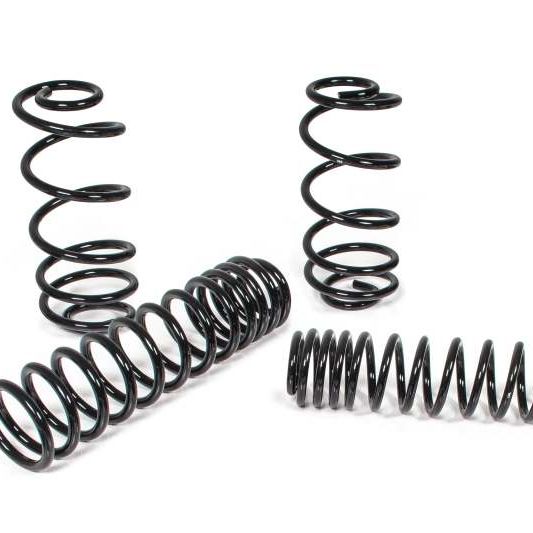
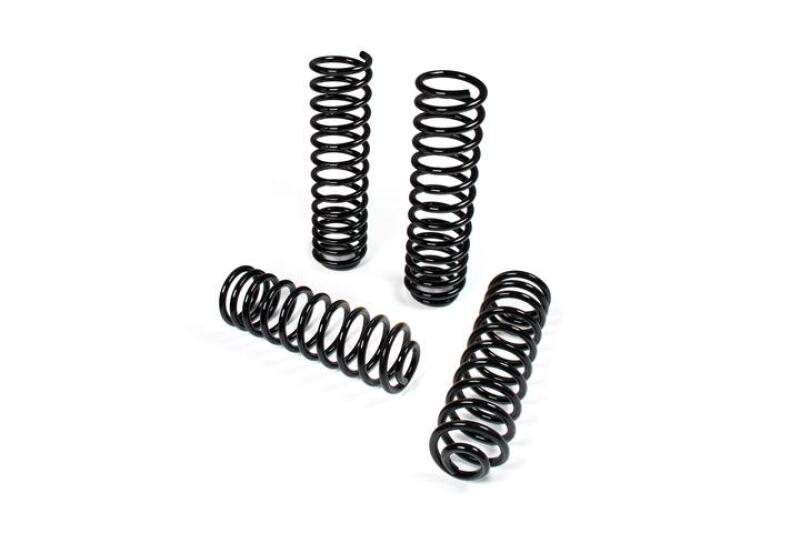
A basic spacer or leveling kit that reuses factory springs and shocks raises ride height cheaply but generally leaves factory spring rates and shock lengths unchanged. That limits off-road articulation and accelerates wear on stock shocks. A coil spring kit like the JKS 2.5 inch box kit replaces the springs entirely with units tuned for that lift height, which improves both ride quality and articulation compared to a stacked spacer setup.
What is often not in the box: adjustable track bars. Once you lift more than roughly 2 inches, factory track bar geometry typically shifts the axle laterally. This can contribute to bump-steer, steering wander, and uneven tire wear, especially as lift height increases. The JKS JL / Gladiator JT Adjustable Track Bar - Front and the JKS JL 0-6in Lift Adjustable Track Bar - Rear re-center the axles and restore correct geometry. The front bar fits both JL Wrangler and Gladiator JT. The rear bar covers 0-6 inches of lift on the JL, so it works across mild and aggressive setups. Above 2. 2.5 inches, front and rear adjustable track bars are highly recommended if you want the Jeep to track straight and wear tires evenly.
Steering stability is a separate issue. The factory stabilizer handles stock tires fine, but once you move to 35 inch off-road rubber on a lifted JL, shimmy and kickback become real. The Fox 2.0 Factory Race Series ATS Stabilizer for JL is designed to bolt to the axle and tie-rod mounts using supplied hardware and factory locations, with no welding or cutting required. It is not strictly mandatory at 2.5 inches with 33 inch tires, but once you feel steering wobble, it is the fix.
On-road stability after lifting also comes down to sway bars. A higher center of gravity means more body roll, especially noticeable on European roundabouts and fast A-roads. The Hellwig 7/8in Chromoly Rear Sway Bar for JK is a bolt-on replacement for the factory rear bar on 2007-2018 JK 4WD models. It tightens body control without killing ride comfort, which matters when your Wrangler is also your daily driver in winter.
On otherwise stock JK/JL/Gladiator suspensions, all five components above use factory mounting points, with no welding or frame cutting required.
Choosing by use case
| Lift height | Typical tire size (JK/JL) | Components you realistically need |
|---|
| 0-2 inches | Up to 33 inches | Leveling spacers or mild coils, stock geometry, alignment recommended |
| 2-2.5 inches | 33-35 inches | Coil lift kit, front and rear adjustable track bars above 2 inches, sway bar links, alignment mandatory |
| 3-4 inches | 35-37 inches | Full suspension system: coils and shocks, adjustable track bars, control arms for caster and pinion correction, possible brake line extensions, steering stabilizer upgrade, alignment mandatory |
| 4-6 inches | 37 inches and up | Complete geometry correction plus driveline checks (driveshafts, pinion angles), upgraded sway bars and stabilizer, alignment and periodic inspections |
For a daily-driven JK or JL with weekend trails, a 2. 2.5 inch coil lift plus front and rear adjustable track bars is a very common and well-balanced setup. Add the Hellwig rear sway bar on a JK or the Fox ATS stabilizer on a JL if you notice on-road instability after fitting larger tires. The trade-offs at this height are manageable: a small fuel economy hit from bigger tires, slightly higher seating position, and a Wrangler that still fits most parking garages.
For serious off-road use with 35 inch tires and larger, many builders choose the 3-4 inch range and budget for control arms, adjustable track bars front and rear, and extended brake lines. More parts, more labour, more alignment work. For overlanding builds with a winch and steel bumper, choose heavy-duty spring rate coils to compensate for the extra front-end weight. For dedicated trail rigs at 4 inches and above, work with a specialist shop and plan driveshaft angle checks before you finalize the build. The control arms, track bars, and sway bars, coil springs, shocks and dampers, and full suspension kits and systems collections cover the supporting parts for each stage.
Jeep Wrangler lift kit FAQ
Do I need a track bar with my lift kit?
Below 2 inches on JK or JL you may get away with stock bars, but at 2-2.5 inches and above, a front and rear adjustable track bar is strongly recommended. Without it, the lifted axles can sit off-center, which can contribute to bump-steer, steering pull, and uneven tire wear. The JKS front bar covers JL and Gladiator JT; the JKS rear bar covers JL from 0-6 inches of lift.
Is installation bolt-on, or does it require welding?
The highlighted components, including the JKS coil kit, JKS track bars, Fox ATS stabilizer, and Hellwig rear sway bar, are all bolt-on installations using factory mounting points on otherwise stock suspensions. No welding or frame cutting required. A full coil lift on a JK or JL is typically a full-day shop job. A steering stabilizer or sway bar swap is under two hours.
Do I need a professional alignment after installing a lift kit?
Yes, always. After any coil lift or geometry changes, a professional alignment is mandatory to set toe, caster, and pinion angle correctly. Skipping it leads to steering pull, bump-steer, and premature tire wear. If your shop flags caster or pinion angle issues, the alignment and geometry correction collection has the hardware to fine-tune those settings.
Will a lift kit affect my TUV or MOT inspection?
Lift height and tire size rules vary by country, and the parts here are performance components rather than type-approved modifications. Check your local regulations and work with a shop that has experience with Jeep lifts and inspections before committing to a height that may require additional documentation.
Are these parts stocked in Europe?
Tuningsupply sources JKS, Fox, and Hellwig Wrangler suspension parts from our EU warehouse network and delivers across Europe, including Germany, France, Sweden, Italy, and the Netherlands, without import fees. We ship from within the EU and orders to European customers typically avoid additional import duties or customs handling; see checkout for country-specific tax and shipping details. Check current product pages for live stock status.
Is the Fox ATS stabilizer necessary if I already have a factory stabilizer?
Not strictly, at mild lifts with stock-size tires. Once you move to 35 inch or larger off-road tires and feel steering shimmy or kickback, the factory unit is no longer enough. The Fox ATS is an upgrade, not an emergency fix, but it makes a clear difference at that tire size.