
 Build of the month


MPN: 90495
NGK Ruthenium HX Spark Plug Box of 4 (LTR6BHX)
Sale price€72.03
Regular price€90.04
In stock (29)

MPN: 46-20754-R
aFe 22-24 Ford Bronco Raptor BladeRunner Aluminum Hot and Cold Charge Pipe Kit Red
Sale price€1,037.03
Regular price€1,139.59
In stock (33)

MPN: 7015PEO
SCT Ford Cars & Trucks (Gas & Diesel) X4 Power Flash Programmer EO Certified
Sale price€407.95
Regular price€463.58
In stock (59)

MPN: 50-70116D
aFe 2024 Ford Ranger Raptor V6-3.0L Momentum GT Cold Air Intake System w/ Pro DRY S Filter
Sale price€753.75
Regular price€837.50
In stock (31)

MPN: T9484
GFB VTA Blow Off Valve 19-23 Ford Mustang 2.3L EcoBoost / 2022+ Ford Ranger Raptor 3.0L EcoBoost
Sale price€292.09
Regular price€343.64
In stock (38)

MPN: T9384
GFB Diverter Valve DV+ 15-23 Ford Mustang 2.3L EcoBoost / 2023 Ford Bronco Raptor/Ranger Raptor 3.0L
Sale price€274.25
Regular price€322.65
Only 5 left

MPN: S5270BLK
MBRP 24-25 Ford Ranger Raptor 3.0L 3in Dual Rear Turn-Down Axle Back Exhaust - Armor BLK Tips
Sale price€699.74
Regular price€777.49
Sold out

MPN: 77-1020KC
K&N 2023 Ford Bronco Raptor 3.0L V6 Aluminum Charge Pipe Kit - Gunmetal Gray
Sale price€593.52
Regular price€659.47
In stock (7)

MPN: ZK F8.8
USA Standard Master Overhaul Kit For The Ford 8.8 Diff
Sale price€166.82
Regular price€203.44
Sold out

MPN: 46-20754-B
aFe 22-24 Ford Bronco Raptor V6-3.0L BladeRunner Aluminum Hot and Cold Charge Pipe Kit - Black
Sale price€1,003.63
Regular price€1,102.89
In stock (20)

MPN: SK SS12
Yukon Gear Super Carrier Shim Kit For Ford 8.8in / GM 12 Bolt Car & Truck / 8.6 & Vette
Sale price€47.44
Regular price€59.30
Only 3 left

MPN: MMTP-RGR-19
Mishimoto 2021+ Bronco 10R60 19+Rgr 17+F150 18+Mus 10R80 Trans Pan - GR
Sale price€472.38
Regular price€536.79
In stock (12)

MPN: 5935015T
Go Rhino 15-22 Ford F-150 / 07-21 Toy. Tundra XRS Cross Bars Kit - Tex Blk (Attch Tonneau Cvr T-Trk)
Sale price€635.03
Regular price€705.59
In stock (7)

MPN: VF2078
K&N 21-22 Ford Bronco Cabin Air Filter
Sale price€58.37
Regular price€72.96
In stock (11)
MPN: M-8200-FRD
Ford Racing 2019-2021 Ford Ranger Front Grille
Sale price€433.73
Regular price€492.88
In stock (12)

MPN: 9000
Firestone Ride-Rite Replacement Bellow 110/70 264mm (For Kit PN 2377 / 2320 / 2379) (W217609000)
Sale price€216.30
Regular price€263.78
In stock (9)

MPN: 64310
Banks Power Pedal Monster Kit (Stand-Alone) - Molex MX64 - 6 Way - Use w/Phone
Sale price€355.29
Regular price€417.99
In stock (157)

MPN: 0750012
ARB Diff Cover Jl Rubicon Or Sport M220 Rear Axle
Sale price€287.62
Regular price€338.38
In stock (8)

MPN: BNWS-001-350BK
Borne Off-Road Wheel Spacers - 6x139.7 - 93.1 - 35mm - M12 - Black
Sale price€271.98
Regular price€319.98
In stock (7)
MPN: 60743BC
Borla 24-25 Ford Ranger Raptor 2.75in Tailpipe Kit 4in Tip - Ceramic Black
Sale price€1,220.23
Regular price€1,340.91
In stock (7)


MPN: 49-33152-B
aFe Vulcan Series 3in 304SS Cat-Back Exhaust 24-25 Ford Ranger Raptor V6-3.0L (tt) w/ Black Tips
Sale price€2,415.07
Regular price€2,466.09
Only 5 left

MPN: 1703206
Truxedo TruXseal Universal Tailgate Seal - Single Application
Sale price€31.92
Regular price€42.56
In stock (7)
Can’t find what you are looking for?
Contact us
Discover more than 600,000 products also available to buy
Recently viewed
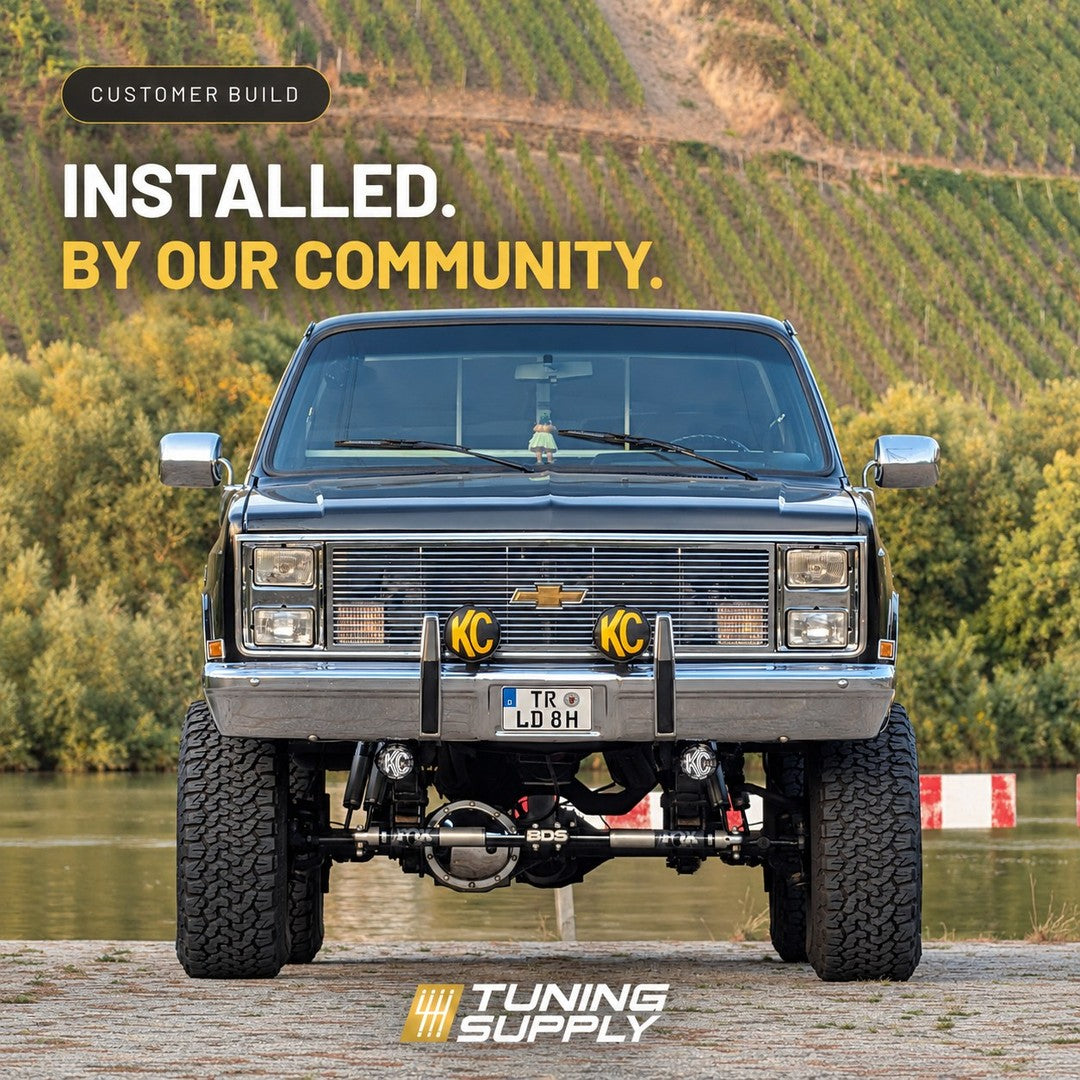
CUSTOMER BUILDS
Built with parts from Tuningsupply



Frequently asked questions
We ship to every EU country, plus Norway and Switzerland, always with track & trace. On request we can also ship to other countries. In that case any import duties and taxes are paid by you.
Not within the EU, Norway and Switzerland. Our prices include VAT, and we take care of import duties and customs. There is nothing extra to pay when the courier arrives.
We carry more than 800,000 parts from over 400 brands. Some parts ship from European stock. Others we order from the manufacturer or distributor, often in the US, and we handle the import. Every part comes through our warehouse in the Netherlands, where we check it before it ships to you.
That depends on your country and the shipping method you choose at checkout. Most parts reach our warehouse within 2 to 4 business days. With DHL Express they then reach you in 1 to 2 business days, so with the fastest option we can deliver almost anywhere within 6 business days.
We do depend on our suppliers and carriers, so these times are estimates. You get a track & trace link as soon as your order ships.
Standard shipping is with DPD. At checkout you can also choose DHL Express Economy or DHL Express Air for faster delivery. Large parcels go with NL Logistics within the Netherlands and Belgium, and with DHL Express to all other countries.
Send us your VIN, or your car's make, model, year and trim, and we check fitment for free before your order ships. Contact us before you order.
Yes. As a consumer you can register a return within 14 days of receiving your order through our returns portal, and then send it back within another 14 days. Return shipping is at your own cost, unless we sent the wrong part or it arrived damaged. Installed or used parts may not be refunded in full.
Read our returns policy for all details.
Yes, as long as we have not yet ordered the part from our supplier. Email support@tuningsupply.com as soon as possible. Special orders cannot be cancelled.
Email support@tuningsupply.com, call +31 85 212 9914 or use our contact page. We are happy to help.