Which generation is your Tundra?
This is the most important fitment check in this collection, and the most common source of ordering errors.
| Generation | Model years | Suspension architecture |
|---|
| First generation | 2000-2006 | Earlier chassis and geometry; use generation-specific parts only |
| Second generation | 2007-2021 | Broadest aftermarket coverage; independent front suspension, rear leaf springs |
| Third generation | 2022 onward; verify exact model year and configuration | Revised platform; multilink rear with coil springs or available air springs on eligible configurations; not interchangeable with 2007-2021 parts |
The 2022 redesign introduced a new platform and changed the rear suspension from leaf springs to a multilink design with coil springs and optional rear air suspension on eligible configurations. A product confirmed for a 2007-2021 Tundra should never be assumed to fit a 2022-and-newer truck. Model year alone is not enough: confirm your drivetrain (2WD or 4WD), cab configuration (for 2022-and-newer trucks, Double Cab or CrewMax; for 2007-2021 trucks, Regular Cab, Double Cab, or CrewMax), trim, and whether your 2022-and-newer truck has the standard rear coil springs or, on eligible configurations, the optional factory rear air suspension.
What do you want your Tundra suspension to do?
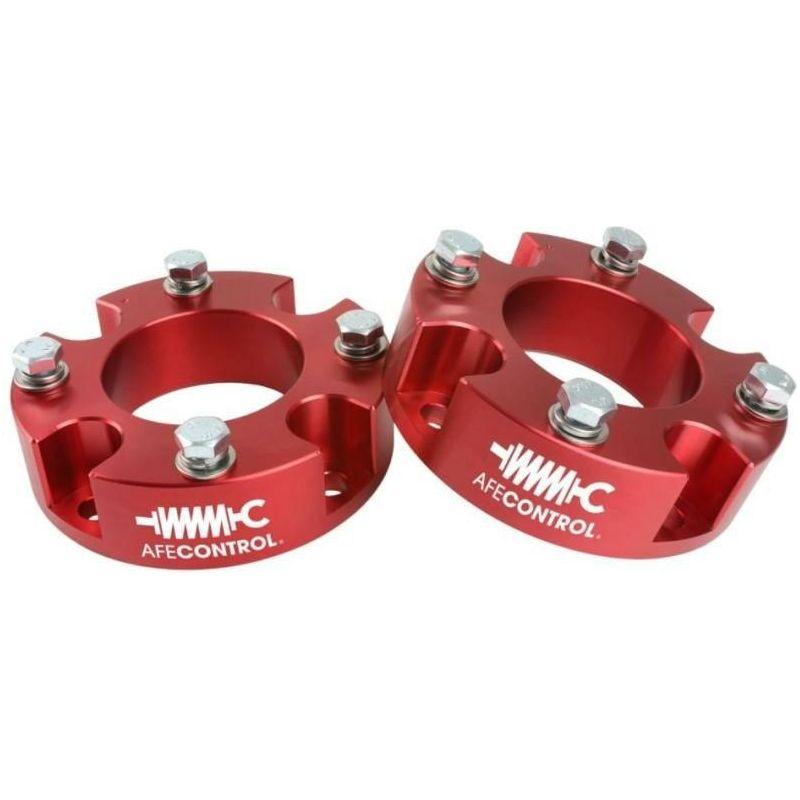
Level the stance and clear larger tires. The Tundra sits nose-down from the factory. A leveling kit, lift spring, or height-adjustable coilover can bring the front up; many products offer approximately 1.5-2.5 inches of front height adjustment, but verify the exact application and maximum recommended setting for your truck. Larger tire clearance is application-specific and must be checked against wheel specifications, offset and backspacing, suspension travel, and body clearance. Coilovers give you more control over final ride height and damping than a basic spacer solution, but they cost more and require a professional alignment. Depending on how much lift you run, aftermarket upper control arms may be needed to provide additional caster and ball-joint clearance and help achieve alignment targets. UCAs are a geometry correction tool, not a lift device.
Improve daily ride and body control. Performance shocks improve damping without changing ride height. Coilovers combine spring and damper control in one adjustable package. For a 2007-2015 Tundra, the Eibach Pro-Truck Coilover 2.0 with Rear Reservoir Shocks uses a 46mm monotube piston, threaded body, and nitrogen fill for adjustable ride height; refer to the product listing for the exact adjustment range and drivetrain coverage for this part number. For a 2016-2021 4WD Tundra that needs stronger damping front and rear, the Eibach Pro-Truck Coilover Stage 2 upgrades both ends of the truck, not just the front; confirm the exact components included and the drivetrain coverage on the product listing before ordering. Be honest with yourself: a firmer damping setup will transmit more road imperfections on rough pavement. Shocks alone do not create lift.
Fix rear sag under payload or towing. If the rear squats under load or your headlights aim too high when towing, air helper springs can reduce rear sag and help maintain ride height under approved loads. One important clarification: air helpers do not repair overloaded, damaged, or inadequate suspension components, and they do not increase your truck's legal GVWR, axle rating, or factory towing capacity. The Firestone Ride-Rite AIO Wireless Kit for 2022-2024 Tundra 2WD/4WD is listed for specified model years and drivetrain configurations; refer to the manufacturer's fitment data for part number W217602892 to confirm coverage and included contents. If your 2022-and-newer Tundra has the optional factory rear air suspension, confirm compatibility before ordering. Replacement bellows for existing Firestone systems are available via the Ride-Rite Replacement Bellow 267C; the 267C fits only the Firestone kit part numbers listed on its product page, so match your existing kit number before ordering.
Build for trails or overlanding. The typical path combines front coilovers or lift springs with better-damped rear shocks, corrected upper control arms where geometry requires it, and extended sway-bar links or alternative link hardware where the suspension manufacturer's instructions call for it. correct link length and type depends on lift height, suspension design, and the specific kit. Final CV-angle and alignment checks are not optional after this kind of build. Stiffer or non-disconnectable sway bars can potentially limit independent wheel articulation on trail, particularly with significantly stiffer bars; for mixed-use builds, disconnectable end links are worth considering.
Choosing between the main upgrade paths
| Upgrade path | Best for | Typical height change | Main trade-off | Alignment required |
|---|
| Coilovers | Daily driving, trail use, adjustable stance | Varies by kit and application; refer to product listing | Higher cost; geometry checks may be needed | Yes, after front height or geometry changes |
| Lift springs and shocks | Mild lift with improved damping | Varies by kit; refer to product listing for exact application | Less adjustable than coilovers | Yes, after front height or geometry changes |
| Air helper springs | Towing and payload support | Load-dependent; maintains rear height | Does not raise legal GVWR or tow rating | Check per manufacturer's instructions |
| Performance shocks | Better damping at stock or mild lift | Replacement shocks do not normally create lift; use a shock designed for the vehicle's actual ride height and suspension travel | No lift or tire clearance gain | Usually not for height alone |
What to check before you order
Confirm your model year, generation, 2WD or 4WD, cab configuration (for 2022-and-newer trucks, Double Cab or CrewMax; for 2007-2021 trucks, Regular Cab, Double Cab, or CrewMax), trim (TRD Pro trucks with factory FOX shocks require application-level compatibility verification for your exact model year and factory suspension configuration), and whether your 2022-and-newer truck has the standard rear coil springs or, on eligible configurations, the optional factory rear air suspension. Note your current lift height, any existing aftermarket coilovers or shocks, and your wheel and tire size including offset and backspacing. Front ride-height or geometry changes require a professional alignment at final ride height; rear-only installations should be checked according to the manufacturer's instructions and the vehicle's measured alignment. After that, recheck clearance for CV axles, brake lines, sway bars, and bump stops. Suspension upgrades produce no horsepower or torque gain; the measurable benefits are ride height, damping, load support, and wheel control.
Tuningsupply's Tundra suspension range covers all three generations. Eligible products ship from EU stock; check the individual listing and destination-specific shipping and tax terms for availability before ordering.
Brands in this collection
Eibach covers coilovers, springs, and matched lift systems for daily and trail-focused 2007-2021 Tundras. FOX supplies performance and reservoir dampers for buyers prioritising repeated-impact control and off-road damping. Bilstein offers performance shocks for stock-height or mildly lifted trucks. ICON Vehicle Dynamics builds complete performance-oriented systems for more comprehensive builds. Rough Country provides lift kits, extended links, and supporting hardware. Firestone offers selected load-support applications for specified Tundra generations; confirm exact fitment at the product level.
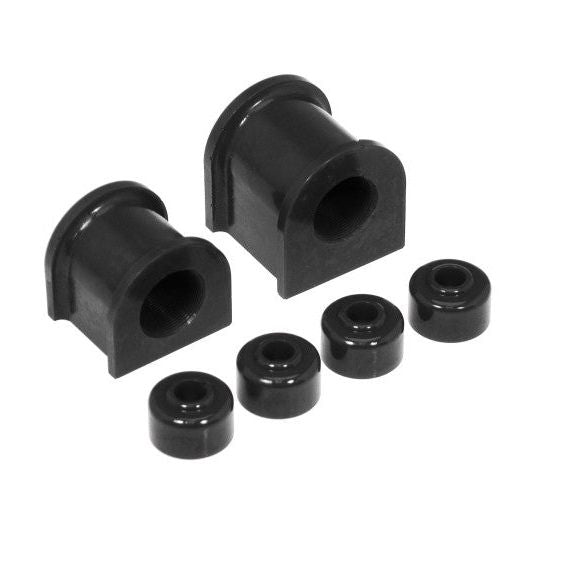
Brand compatibility does not equal fitment. Every product still needs to match your generation, drivetrain, cab, trim, rear suspension type, and existing modifications. Browse by category: Suspension Kits and Systems, Shocks, Struts and Dampers, Springs, Arms, Bars and Bracing, Air Suspension, Alignment and Adjustment, and Bushings and Mounts.
Common questions
Do 2007-2021 suspension parts fit the 2022-and-newer Tundra?
Usually not; the generations use different suspension designs, so compatibility must be confirmed for the exact part. The third-generation platform uses a different rear suspension architecture with multilink geometry and coil or air springs. Never assume cross-generation compatibility; verify the exact product application.
Will I need upper control arms with a 2-inch lift?
Not always. It depends on the kit, final ride height, and your existing geometry. UCAs may provide additional caster and ball-joint clearance and help achieve alignment targets on applicable 2007-2021 setups. Check the product instructions and have your alignment shop assess the geometry at final height.
Do air helper springs increase my towing capacity?
No. They can reduce rear sag and help maintain consistent ride height under approved loads. They do not increase your legal GVWR, axle rating, braking capacity, or factory towing limit.
Is a wheel alignment required after installing coilovers or a lift kit?
Yes after front ride-height or geometry changes; inspect and follow the manufacturer's guidance for rear-only or non-height-changing installations. Any change in front ride height or geometry requires a professional alignment. Recheck after the suspension settles.
Can I install these parts myself?
Many shocks, coilovers, and control arms bolt to factory mounting points, but difficulty varies. Air-helper systems require correct wiring, air-line routing, heat protection, and leak testing. Assess the product instructions against your tools and experience before committing.
Do these upgrades add horsepower?
No. Suspension parts change ride height, damping, load support, handling, clearance, and wheel control. They have no effect on engine power or torque.
Do you deliver Tundra suspension parts across Europe?
Yes. Eligible products ship from EU stock; availability, delivery options, VAT, and destination-specific charges are shown at checkout or on the product listing. Stock status varies by product; check the individual listing for availability and applicable terms before ordering.